Saturday, March 26, 2011

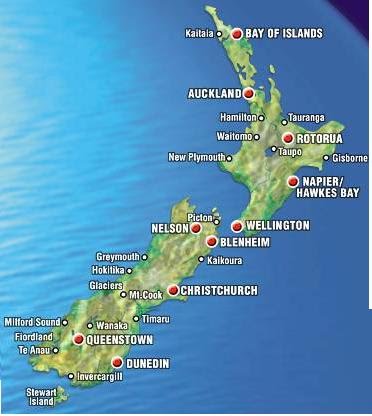
What to do in Wellington?


Year 8's, our fantastic friends at Brooklyn School would like to know what types of activities you would like to do while we are in Wellington. Add a comment to this post with your ideas and then they will investigate the logistics.

Sixty Symbols


Ever wonder what some of these symbols mean. Check out this website http://www.sixtysymbols.com/ and click on the symbol to watch a video explaining their meaning. There is also information about the scientists behind the symbols.

Thursday, March 17, 2011

School Re-opening

This article written by Michael Wright was published in the Press Newspaper on March 16th 2011.

Pupils will return to Redcliffs School next week after a protective fence is erected. Last month's quake triggered major rockfalls from the cliffs behind the school. The school was working with geotechnical engineers on protective measures, including a fence and shipping containers. Work on the barrier began this week.

Principal Kim Alexander said the school had essential services and the fence was the final hurdle. "We're just working through those issues with the aim that we will reopen next week," she said. "There'll be a few rooms at the back of the school, including the hall, that will be out of use for a few months." Channels known as bunds were dug behind the school after the September 4 quake to capture rocks. Alexander said 80 per cent of the school's buildings would be used. However, the school hall and one classroom block were deemed too close to the cliff to use. She said every class would have its own space in the smaller grounds.

Forty per cent of the school's 390 pupils had enrolled elsewhere, but Alexander was confident most would return."The indication from a lot of the parents is that this is a short-term thing and they will be back once we reopen," she said. "I'm expecting next week that we will certainly have lower numbers, but that will climb rapidly."

The school had organised a drop-in learning centre for pupils at the Redcliffs Anglican Church, with more than 100 children attending on Monday. Michael and Kate Bamford said it would be great to have their four children back at Redcliffs School. Their children, Vaughan, 12, Ida, 10, Judson, 7, and Kent, 5, "don't say much about the quake". "They talk about the cliff. They say `at least we're still alive'." Tony and Sarah Joseph's three children, Mia, 10, Monty, 7, and Caspar, 5, were coping well with the unscheduled holiday. "I think we're all ready for them to go back," Sarah Joseph said. "It'll be good for them to get back to some normality". Both families had made use of the drop-in centre. "It's been really good for them to be able to see their friends," Joseph said.

St Patrick's Day

Saint Patrick was born in Britain at the end of the fourth century. He worked as a shepherd, and one day he was kidnapped and sold into slavery. For six long years he worked as a slave. Bearing heartache, beatings, and struggle, religion soon became his only comfort. One day, he managed to escape, and was able to answer his lifelong call. St. Patrick studied Christianity, and came to believe that it was he who would sail to Ireland and convert all of the pagan peoples to Christians.


St. Patrick's winning personality made him a hit with the Irish. He used many familiar symbols to the Irish to help convince them that converting to Christianity was a good choice. One of the symbols he used was the very familiar, and very sacred Shamrock. St. Patrick used this symbol to represent the Holy Trinity (the Father, the Son, and the Holy Spirit). St. Patrick's mission in Ireland lasted for thirty years, and after he drove all of the snakes from Ireland (he converted the pagan peoples), he peacefully passed away in his sleep on March 17th in the year 461 A.D.

Tuesday, March 15, 2011

Year 8 Camp


We have had an amazingly generous offer from Year 8 students at Brooklyn School in Wellington. They have heard how we have all been affected by the earthquake, how we are living in damaged homes, some still without water and power. They have also heard that we missed out on our Hanmer Camp.

After hearing about the devestation in Christchurch they have begun fundraising to bring Redcliffs School Year 8 students to Wellington. They are organising transport, accomodation (through billets) and activities for us to do while we are there. What an incredible thing for them to do for us. It is looking likely to be in the week of the 23rd to 27th May. A huge thank you to the students, teachers and community of Brooklyn School.

Drop In School

It was fantastic to see so many of you yesterday at the Drop In School. It was nice to hear your stories and see you catching up with your friends. Some of you are even mini-celebrities!!!

Sunday, March 13, 2011

Dominoes


Dominoes are rectangles that have two lots of numbers on them. The numbers range from 0 to 6 and are usually indicated by dots in the same way that a dice is numbered.


How many different dominoes are there in a set with 0, 1 and 2 dots?


How many different dominoes are there in a set with 0, 1, 2, 3 and 4 dots?

How many different dominoes are there in a set qith 0, 1, 2, 3, 4, 5 and 6 dots?

Hint: using a tree diagram will be helpfull

Email me your answers to teamone@redcliffs.school.nz


Pizza Toppings


Penny's favourite pizza restaurant offers 6 toppings: ham, onions, mushrooms, pineapple, tomato and peppers. Penny ordered a pizza with ham and pineapple. Unfortunately the server only wrote down that she wanted 2 toppings but didn’t write down what they were. The cook decided to pick two toppings at random.


What is the probability that Penny will get the pizza she ordered?
Hint: Work out all the possible two topping options, a tree diagram or table will help you with this.

Email me your answer to teamone@redcliffs.school.nz

Bubblegum Machine


Ms Mataira comes across a bubble gum machine when she is out shopping with her twins. Of course, the twins each want a bubblegum. What’s more they want one of the same colour. Ms Mataira can see that there are only blue and yellow bubblegum balls in the machine. The bubblegum balls cost 50c each. How much money will Ms Mataira have to spend to make sure that she gets two bubble gum balls of the same colour?


The next day Ms Mataira sees a different bubblegum machine. This one has three colours – blue, yellow and red. What is the most Ms Mataira might have to spend?


Here comes Mr Smith with his three children past the 3-colour machine. If all his children want the same colour as well, how much will he have to spend?


Email me your answer to teamone@redcliffs.school.nz

Friday, March 11, 2011

Pop Art


For art this term we will be learning about Pop Art. Andy Warhol was one of the pioneers of this new art form or craze and he was responsible for the art works above.

What can you find out about Pop Art and also Andy Warhol's influence?

Tuesday, March 8, 2011

Fractions with denominators of 100 and 1000

Purpose:
The purpose of this activity is to help your child to simplify fractions with a denominator of 100 or 1000.

What you need:
Game board and cards. You can print these or make your own.
Cardboard. (Old cereal boxes are good).

What to do:
Glue the cards on to cardboard. Cut the cards, shuffle them and place in a pile between the players. Give each player a game board.
Players take turns to take a card from the pile. If the card is equivalent to a fraction on their game board, they can cross off the fraction and return the card to the bottom of the pile. If not, then the card is just returned to the bottom of the pile. The winner is the first player to cross off all the numbers on their game board.

What you should be able to do:
Over time you should become quicker at recognising the simpler form of the fractions with a denominator of 100 and 1000.

Variation:
Play Snap or Memory with the game cards, 25/100 and 250/1000 would be a pair.
Use the game cards as flash cards and ask your child to name a simpler fraction.

Decimal Cards

Purpose:
The purpose of this activity is to help your child understand decimal place value.

Link to Number Framework:
Place Value, Stages 7-8

What you need:
• A deck of cards with the face cards and jokers removed (aces count as 1s and 10s count as 0s).

What to do:
• Choose a target decimal number (eg 4.825).
• Deal each player 6 cards (two more cards than the number of digits in the target number).
• Each player has to construct a number as close as possible to the target number. For example if a player is dealt 3, 4, 4, 5, 7, 9 the closest number they can make is 4.795.
• The player whose number is closest wins a point.
• The winning player chooses the number for the next round.
• You can play either that the first player to get 5 points wins, or whoever wins the most out of 10.

What you should be able to do:
• Use place value to decide which cards to use and in which order.
• Be able to tell you how many ones, tenths, hundredths etc in the number.
• Understand that the cards in the higher ‘places’ make more difference to the overall size of the number than those in the smaller ‘places’.

Variations:
• Change the number of decimal places in the target number.
• Require that the number be the closest possible number less than the target number.
• Require that the number be the closest possible number more than the target number.
• Include the jokers and allow them to be used as a wild card (any digit).

Sunday, March 6, 2011

Smallest Number Challenge

Smallest Number Challenge

Purpose:
The purpose of this activity is to help you learn to order decimals with three decimal places.

What you need:
• A set of cards with the face cards and number ten in each suit removed
• 2 small round objects to represent a decimal point, for example buttons

What to do:
Play the Smallest Number Challenge, a game for 2 players.
• Cards are shuffled and placed face down in a pile.
• The first player draws 4 cards and turns these over. They use these cards, and a button, to make the smallest number possible with three decimal places. For example, if the cards 6,8, 5 and 4 are drawn the number, 4.568, is made:
• The next player takes their turn by drawing four cards and using these to make a number that is smaller than the number made by the previous player. They must use all the cards and the number must have three decimal places.
• Play continues in this way until one of the players is unable to make a number smaller than their opponent’s. Their opponent then wins that round and scores a point.
• The first player to reach 5 points is the winner.

Variations:
• Largest Number Challenge - players have to make a larger number instead of a smaller one.

Saturday, March 5, 2011

Where are you?


I know that some of Team One have travelled out of Christchurch. We would love to know where you are and how you are getting on. When you get the chance please add a comment to this post and tell us where you are and what you are enjoying doing.

Friday, March 4, 2011

Where do I start?


I don't know exactly how I'm going to write this.

Firstly I am so pleased that you are all safe and well. I hope that your families and fiends accross Christchurch also find themselves this way. Such an unreal experience with such tragic consequences. It is proving hard to comprehend the devastation. The way neighbours have looked out for each other and strangers have relentlessly given help to others is heartening. So many people are doing such amazing things to help the city and people get through and eventually get stronger from this tragedy.

I have heard that a number of you are making some new friends at schools around the country. Others of you I have seen in Redcliffs and others we will try to contact over the next few days. We are working hard to re-open the school. In the meantime we will post some activities on this blog which you can do.

Look after each other.
Team One Teachers